
Landscaping Schemes
Planning-ready landscape schemes that clarify external works, strengthen applications, and keep design decisions predictable.
Do you need a landscaping scheme?
If your project involves external works, planting, boundaries, levels, drainage, visual impact or coordination with trees, your LPA will normally require a landscaping scheme.
It’s the document set that shows how the external environment fits together — materials, planting, levels, structure, and how the site responds to local policy. A clear scheme prevents avoidable planning queries, late-stage design changes and condition-related delays.
What is a landscaping scheme?
A landscaping scheme is the full package of drawings, planting plans, materials, levels and detailing that define how external spaces function, look and integrate with trees, drainage and built form.
In practical terms: it shows what goes where, how it fits, and how it will be managed.
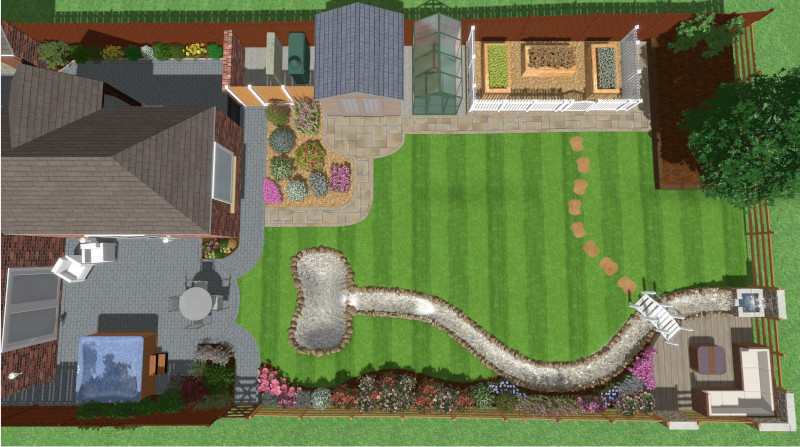

Trigger points — signs your site needs a landscape scheme
Common triggers include:
Landscape required at validation
LPA requests planting or mitigation detail
LVIA requires visual strengthening
Trees or RPAs influence layout or levels
BNG requirements need planting structure
External design is entering tender or condition-discharge stages
These triggers frequently lead to delays when landscape is introduced too late. We make the process predictable.
What We Deliver
We keep guidance clear and planning-ready — supporting predictable project delivery.
| Service | Purpose | Outcome |
|---|---|---|
| Landscape Plans | Define hard/soft layout, materials, surfaces and boundaries | Clear external logic aligned to architectural drawings |
| Planting Plans | Species structure, habitat logic, BNG alignment | Policy-aligned, manageable and visually coherent planting |
| Landscape Strategy | Higher-level direction for phased schemes or pre-application | Early clarity that keeps design conversations predictable |
| Mitigation & Visual Logic | Structure to support LVIA / character integration | Proportionate planting and layout refinement |
| Root & Tree Integration | Resolve RPA, canopy and levels conflict | Clear, defensible detailing that avoids redesign |
| Planning-Ready Documentation | Full package aligned with LPA expectations | Smooth validation, condition discharge and programme stability |
How it Works
Our process is designed to remove friction and keep decisions moving.

Site Review & Brief
Context, levels, trees, drainage, materials, constraints and planning requirements.

Design & Detailing
Landscape plans, planting plans, material logic, mitigation and coordination with other disciplines.

Submission & Support
Planning-ready files, LPA responses, condition discharge and design-team coordination.
Timing & Submission Windows
Landscape schemes can be produced year-round, with three key timing considerations:
Planning Validation
Many LPAs require landscape detail upfront when external works or visual character form part of the proposal.
Condition Discharge
Planting plans, mitigation and material detail often form pre-commencement or pre-occupation conditions.
Integration with Trees / BNG / LVIA
Landscape must align with survey outputs — sequencing matters when RPAs, BNG uplift or visual mitigation influence design logic.
Why planning officers request LVIAs
Local planning authorities rely on landscaping schemes to judge whether a development will sit comfortably within its setting and meet policy expectations.
LPAs typically expect landscaping schemes to demonstrate:
Visual Integration — how the proposal responds to local character, views and neighbouring properties.
Planting Logic & Structure — appropriate, proportionate species, spacing, canopy strategy and long-term management.
Technical Coordination — clear relationships between landscape, access, drainage, levels, boundaries and retained trees (often under BS 5837 constraints).
Mitigation & Green Infrastructure — proportionate measures for screening, biodiversity, SuDS integration or BNG relevance.
Compliance With Conditions — many approvals attach landscape conditions; strong schemes reduce discharge risk and negotiation.
LPAs request landscape schemes to confirm visual integration, proportionate planting and coherent external design aligned with:
National & local planning policy
BS 5837 — trees & development
BNG guidance
GLVIA3 principles (where visual considerations apply)
Local design codes & character assessments
SuDS / drainage requirements
When these elements are missing, planners commonly issue validation queries, request resubmissions, or pause progression until a compliant scheme is supplied. Early clarity avoids the cycle of redesign.
Our Approach
We design with a planning-first mindset, integrating visual clarity with the technical accuracy your wider team needs.
Our approach ensures:
Policy-aligned design logic that strengthens planning outcomes and avoids unnecessary negotiation.
Buildable, realistic solutions that reflect genuine site constraints — not theoretical drawings.
Early coordination with arboriculture, ecology, drainage and engineering to prevent conflicts later in the programme.
Clear, consistent documentation that planners can read quickly and contractors can build from confidently.
Steady project momentum through defensible detail, proportionate mitigation and a reporting format shaped for planning and condition discharge.
Our role is to bring certainty, joining together technical surveys, design requirements and planning expectations so your project progresses without avoidable delays.
How this supports your project
When landscape needs surface late, we stabilise it.
Landscape is often reviewed after architectural layouts, resulting in:
level clashes
insufficient planting detail
unclear boundary logic
tree conflicts
missing mitigation
validation queries
We deal with this scenario routinely.
Our role:
Resolve the landscape requirements quickly, proportionately and in a format planners trust — while avoiding unnecessary redesign.
Earlier involvement simply gives the design team more room to manoeuvre, but when we join late, we focus on stabilising the programme and meeting planning expectations with minimum disruption.
A strong landscape scheme:
stabilises planning conversations
clarifies intent for contractors
reduces need for layout redesign
integrates trees and drainage early
strengthens visual and character outcomes
provides long-term management clarity
Landscape is the interface between design, planning and construction — we ensure those interfaces work.
Case Insight
Your Next Step
Need a planning-ready landscape scheme?
We’ll confirm requirements, stabilise your programme and deliver clear, proportionate documentation.
Phone: 0800 494 7479
Email: [email protected]
Landscaping Scheme - FAQ
Do I need a landscaping scheme for planning?
Often yes.
LPAs typically request a landscape scheme when external works, planting, boundaries, levels, SuDS features, visual mitigation or green-infrastructure elements form part of the application. Some authorities require full detail at validation; others request it as a pre-commencement condition. We confirm the exact expectations for your site and authority.
What’s included in a landscaping scheme?
A complete scheme usually contains:
• Hard and soft landscape plans
• Planting layouts and schedules
• Materials, surfaces and edge details
• Boundary treatments
• Levels, gradients and interfaces
• Tree integration (including RPA constraints where relevant)
• Mitigation and visual structure
• Management and aftercare notes
Together, these components form the planning-ready evidence package LPAs rely on.
Can I submit the planning application without a landscape scheme?
Sometimes—but it carries risk.
If landscape is central to character, amenity, mitigation, or visual impact, submitting without detail can trigger validation queries, further information requests or programme delays. We advise the safest route for your project timing.
Where does a landscaping scheme sit in the wider design process?
Landscape sits at the intersection of:
• architecture
• drainage / SuDS
• ecology & BNG
• arboriculture
• engineering levels
A strong scheme ensures these disciplines align instead of conflicting late in the process.
How detailed does planting need to be?
Detail should be proportionate to the stage.
For planning, LPAs typically require species, quantities, structure, root protection considerations and clear logic for character and mitigation. For condition discharge, further technical detail may be needed. We match the level of detail to your authority’s expectations.
Can a landscaping scheme be updated after planning?
Yes.
Where required, we refine the planning version into a construction-ready package or update it to satisfy landscape-related conditions. This avoids the need for redesign or re-submission.
How does a landscaping scheme connect to ProHort’s other services?
A landscape scheme acts as the coordination point for external works:
• LVIA → informs visual mitigation and character logic
• Arboriculture → integrates RPAs, mitigation and levels
• BNG & Ecology → aligns planting, habitat creation and measurable gains
• 3D Landscape Design → strengthens clarity, reduces uncertainty and improves submissions
Together, these establish the full evidence base LPAs expect for external environments.
Can landscape design influence visual impact or LVIA outcomes?
Yes.
Planting structure, boundary treatments, green buffers and character-led detail can materially influence visual outcomes. A well-constructed scheme often reduces visual concerns before they become formal LVIA issues.
We already have architects’ drawings — do we still need landscape input?
Yes.
Architectural layouts rarely address planting structure, materials, level transitions, mitigation logic, SuDS interfaces or tree constraints. Landscape ensures these elements work together without late redesign.
Will a landscaping scheme reduce redesign later?
Typically, yes.
Landscape brings clarity to external circulation, levels, planting, materials and constraints. Clear early decisions prevent avoidable adjustments during planning review, tender or construction.
Can you work with our existing consultants?
Yes.
We integrate smoothly with architecture, drainage, ecology and arboriculture teams. Where required, we incorporate their reports and constraints directly into the landscape scheme.
Do you visit the site?
Yes.
A landscape scheme is informed by on-site context—levels, boundaries, vegetation, setting, character and adjoining influences. Remote working is possible where good survey data exists, but site review strengthens outcomes.
What formats do you supply drawings and documents in?
• PDF for planning
• DWG for design teams and contractors
• Additional formats if required
All documents follow a clean, consistent layout suited to planning officers, architects and site teams.



These connections create a unified, planning-first approach and reduce the risk of conflicting recommendations.